




Do you recognize any of this?
Crying that is hard to soothe or settle.
Clenched fists. A face gone red. Knees brought up to the tummy, or a back that arches.
Crying more often in the afternoon and evening.
A tummy that rumbles, or a baby who is very windy.
More than 3 hours a day, 3 days a week, for at least 1 week — in a baby who is otherwise healthy.
And the part no list covers: the crying comes back after the feed, after the walking, after the thing that worked yesterday.
The NHS lists the first five as signs that a baby may have colic. A list is not a diagnosis, and neither are your notes. All of it is worth writing down.
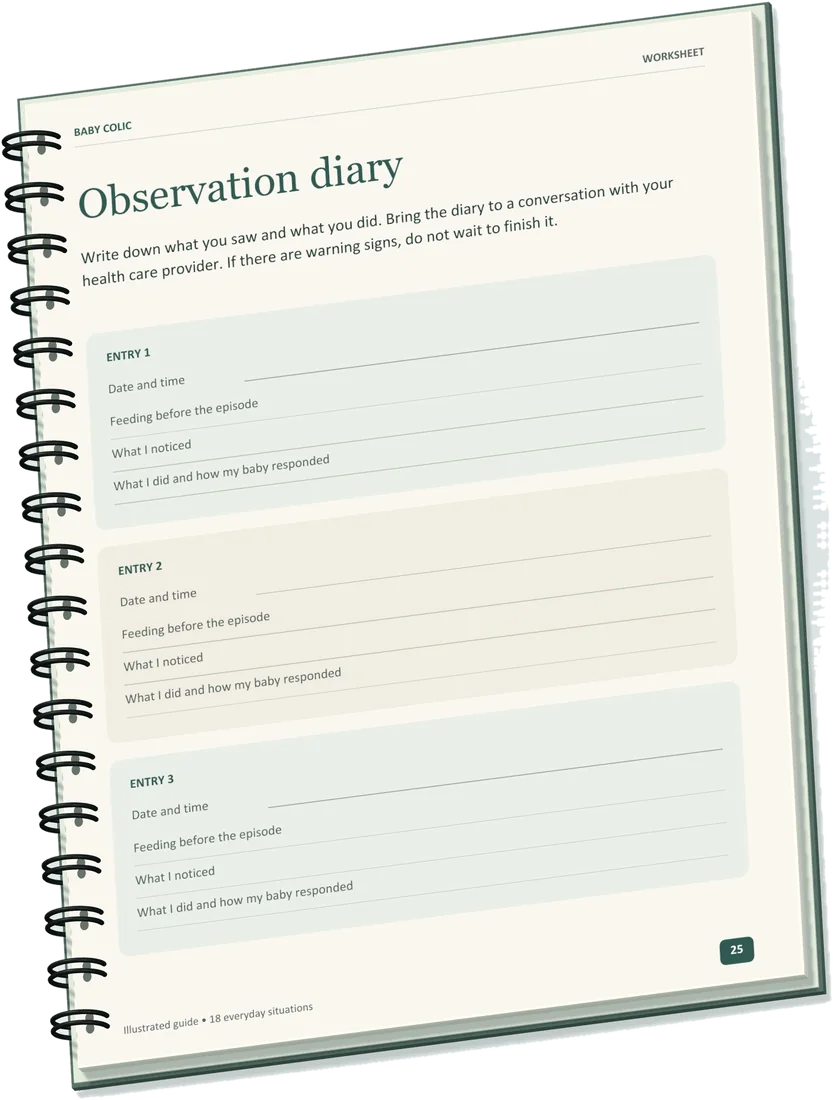
Everyone tells you it passes. Nobody tells you what to write down in the meantime.
It is not for you if:
- You want a diagnosis, a dose or a cure. Page 22: "This guide does not provide doses or tell you to stop a current prescription."
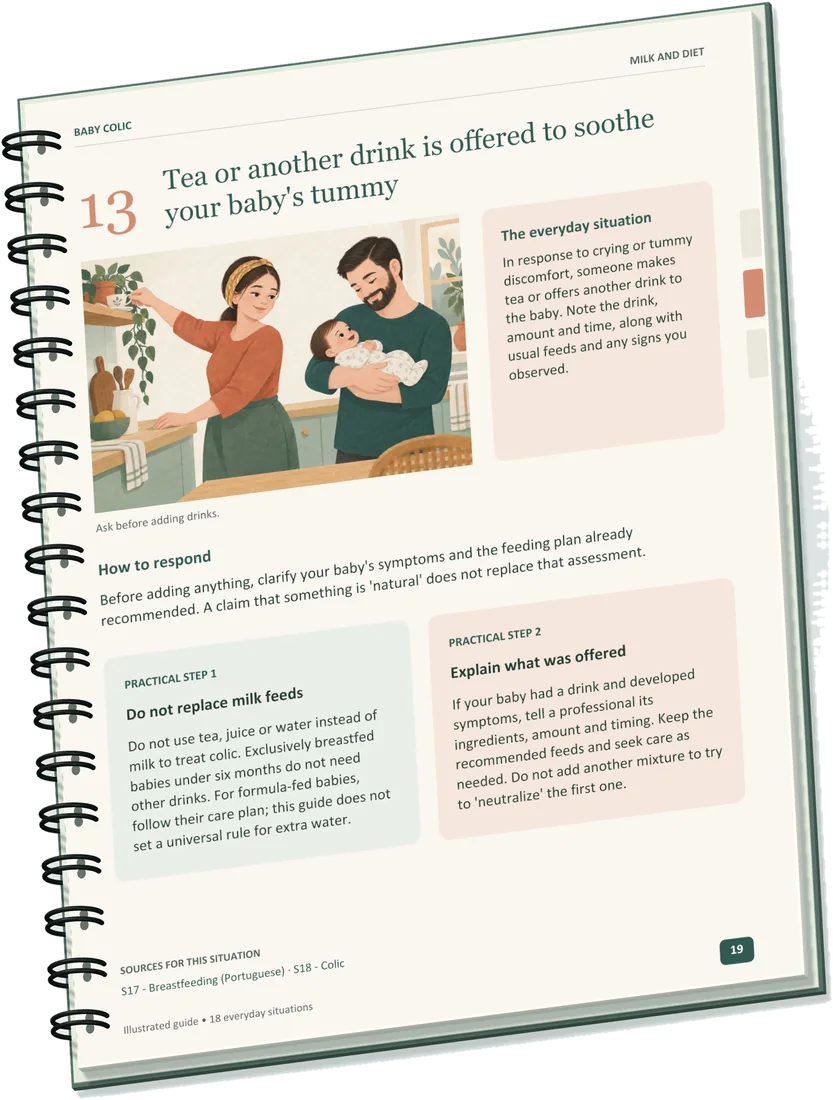
- You want teas, drops or burping techniques. Page 19: "Do not use tea, juice or water instead of milk to treat colic."
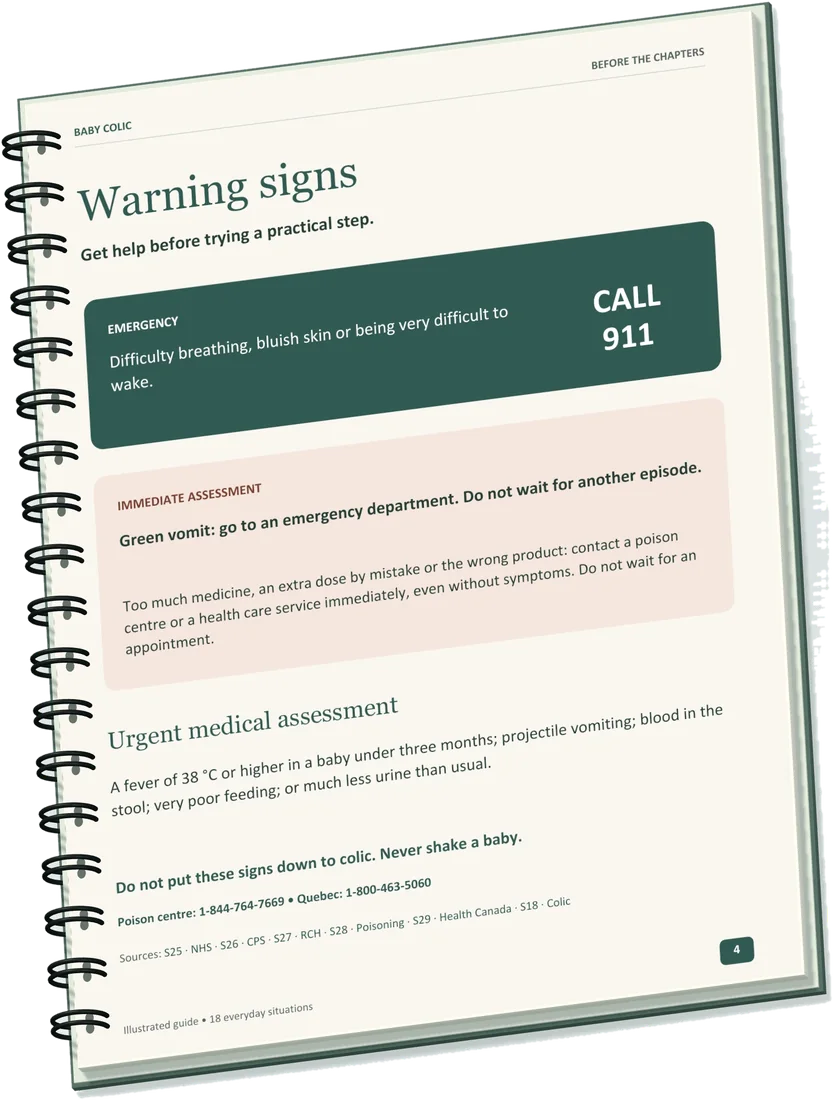
- You need help right now. Page 4 comes first: "Get help before trying a practical step."